
 Tiếng Việt
In the world of building, architecture is the vision, the art of creating space and emotion. But for that vision to become reality, we need “architectural construction” a complex field combining engineering science, material technology, and superior management capabilities.
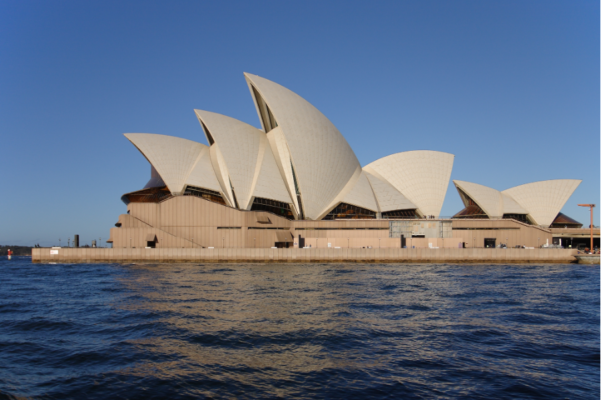
Simply put, architectural construction is the answer to the “how?” question. How can the concrete shells of the Sydney Opera House reach out to the sea? How can the titanium blocks of the Guggenheim Museum curve asymmetrically?
This article will explore how engineers and contractors are turning the most complex ideas into reality, where the mark of Vietnamese enterprises like Dai Dung Group is becoming increasingly evident on the global map.
What are Architecture and Construction?
Architecture is the art and science of designing buildings and structures, emphasizing creativity, aesthetics, functionality, and safety. Architects develop concepts, sketch detailed plans, create technical drawings, and work closely with clients to ensure the design meets all requirements.
On the other hand, construction is the process of turning architectural designs into reality. Construction teams use materials, engineering systems, and skilled labor to transform drawings into complete buildings, managing tasks like site preparation, structural erection, and project logistics.
Timeless Engineering Marvels
Every iconic structure in history was a construction revolution of its time.
Sydney Opera House (Australia): The biggest challenge was not the idea of sails or shells, but how to build it. After many years, the engineering solution was “ribs” made of precast concrete—a colossal challenge in manufacturing and assembling non-standard components in the 20th century.
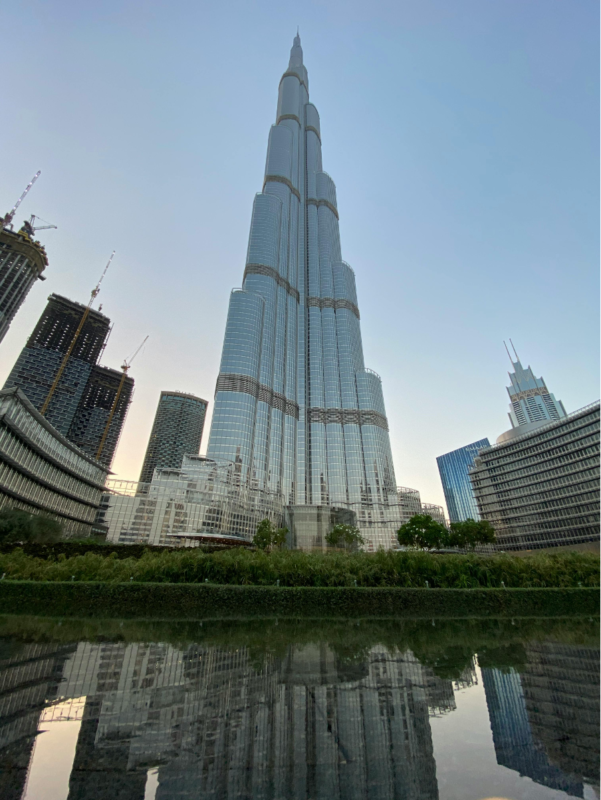
Burj Khalifa (Dubai, UAE): To reach a height of 828 meters, the problem wasn’t just design. In construction terms, it was an engineering marvel: developing a “concrete pumping” system to unprecedented heights and applying a “buttressed core” structure to resist vortex shedding—a key construction solution.
Guggenheim Museum Bilbao (Spain): Architect Frank Gehry pioneered the use of aerospace design software to turn his undulating sculptural blocks into technical drawings. This was a revolution, allowing “architectural construction” to realize asymmetrical forms previously considered “unbuildable.”
Vietnamese Mark on Contemporary Megastructures
Today, Vietnamese enterprises are directly participating in solving the world’s most complex architectural construction problems. Below are typical cases of “architectural construction” capabilities that DaiDung Group has demonstrated.
Powerhouse Parramatta Museum (Sydney) – The “Exoskeleton” Structure Challenge
Hailed as Sydney’s new cultural icon, the museum’s design makes a strong impression with its steel “exoskeleton” structure, undulating like a web enveloping the building.
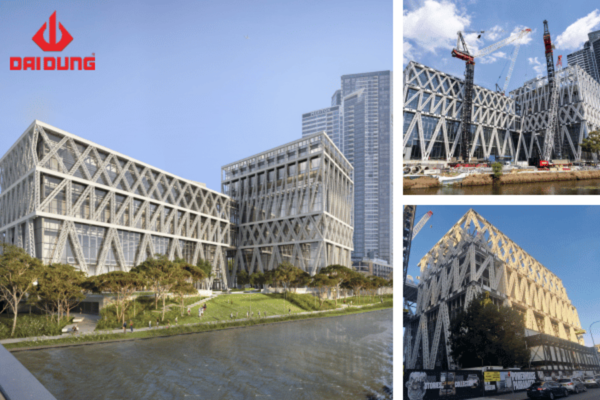
- Architectural Challenge: Unlike traditional column-and-beam structures hidden inside, this “exoskeleton” is both the main aesthetic element and the primary load-bearing structure.
- Construction Solution: This required the steel components to be fabricated with absolute precision, as any deviation would disrupt the entire design and structure. Overcoming many international competitors, DaiDung Group won the bid to supply 8,851 tons of steel structures, solving a typical “architectural construction” problem: manufacturing and erecting complex, non-standard steel modules on one of the world’s most demanding construction sites.
MISK ILMI Science and Technology Museum (Saudi Arabia) – “Sculpting” Steel with Geological Inspiration
As a leading knowledge and innovation center in the Middle East, the building features futuristic architecture inspired by the kingdom’s geological formations.
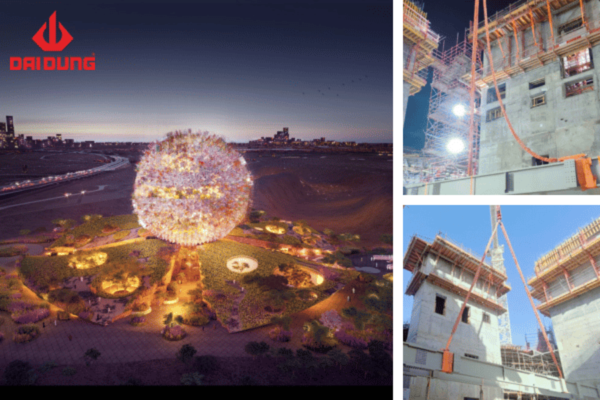
- Architectural Challenge: Designed by a prestigious German architectural firm, the structure consists of flowing, interconnected blocks, creating open, light-filled spaces.
- Construction Solution: This demanded custom-fabricated, non-standard steel components to precisely create the curves and large spans. DaiDung Group won the contract to supply the steel structure, participating in the technical “sculpting” process to realize these organic lines.
Techo Takhmao International Airport (Cambodia) – Optimizing Complex Roof Structures
Designed by a leading British architectural firm, this $1.5 billion airport project focuses on passenger experience and energy efficiency.
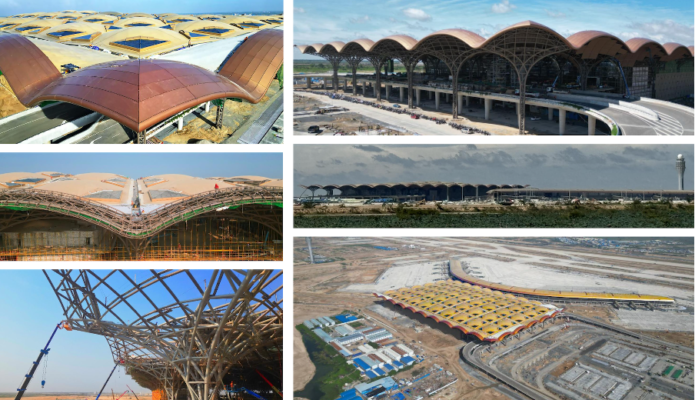
- Architectural Challenge: The highlight of designs from this firm is always the complex, expansive roof system that optimizes natural light.
- Construction Solution: DaiDung Group is the contractor for the supply and erection of the steel structure for the terminal roof. This is the “backbone” of the building, requiring precise management and assembly of large components at height to ensure the seamlessness of the entire architectural vision.
National Exhibition and Convention Center (Vietnam) – From the ‘Golden Turtle’ Concept to Steel Structure
Planned as the largest exhibition center in Asia, the structure is inspired by the image of the ‘Kim Quy’ (Golden Turtle) deity from the Co Loa legend.
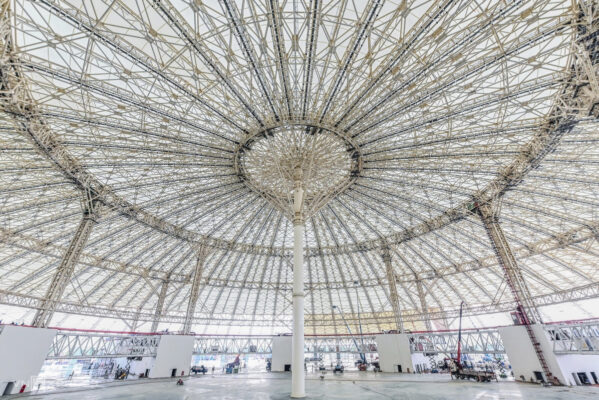
- Architectural Challenge: This presented one of the greatest challenges in “architectural construction”: how to translate a symbolic, cultural icon into a large-scale, high-tech steel structural language?
- Construction Solution: As the main contractor for the steel structure package, DaiDung Group plays a pivotal role in “decoding” the design concept, turning a cultural symbol into a feasible and sustainable engineering marvel.
Conclusion
Architectural construction is the critical bridge, the place where an architect’s vision meets the capabilities of engineers and contractors. From ancient Roman domes to today’s steel exoskeleton structures, human creativity can only become iconic when supported by construction solutions of sufficient stature.
What is truly proud is that on the journey to creating new icons, Vietnamese enterprises like DaiDung Group have been proving their capability, intelligence, and prowess, helping to put Vietnam’s name on the global map of architectural construction.