
 Tiếng Việt
In the petrochemical industry, oil pipeline steel pipes play a critical role, handling the transportation of crude oil, gas, and chemicals from extraction wells to refineries, or for product distribution and storage. Key criteria for these products include superior durability, resistance to corrosion in marine and chemical environments, high-pressure tolerance, and extended longevity, all of which contribute to optimizing operational costs and enhancing safety.
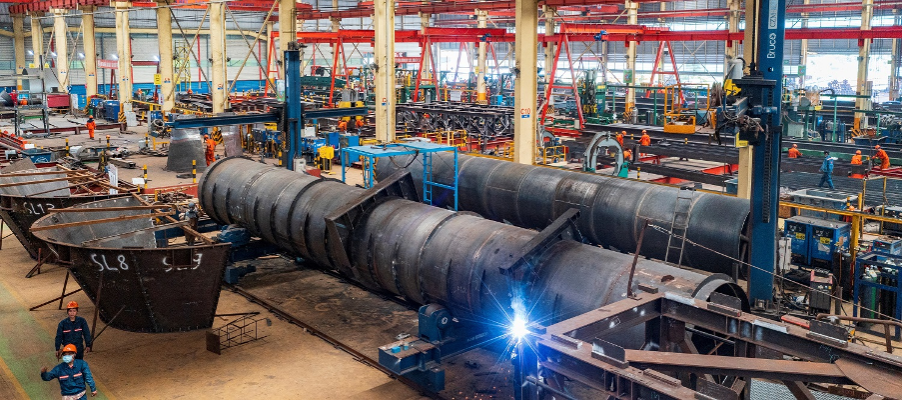
Common Types of Oil Pipeline Steel Pipes in the Petrochemical Industry
The selection of common oil pipeline steel pipes in the petrochemical industry today is based on manufacturing materials, production technology, and international technical standards.
Carbon steel, alloy steel, and stainless steel are the three primary material groups that meet demanding operational environments, such as offshore extraction, petrochemical processing, and high-pressure fuel transport. Among these, stainless steel pipes must also comply with national technical quality regulations to ensure absolute system safety, protect client assets, and minimize operational risks.
The two most common product lines are welded steel pipe and seamless steel pipe. Welded pipes are suitable for large-scale pipeline systems at a reasonable cost, while seamless pipes offer superior durability, leak resistance, and excellent pressure resistance. Additionally, galvanized steel pipes provide enhanced chemical corrosion resistance, extending their service life when installed in outdoor projects, offshore pipelines, or saline environments.
International standards such as API 5L (for oil and gas pipelines), ASTM, and quality management certifications like ISO 9001 and ISO 3834-2, along with AISC regulations, are mandatory benchmarks in the production and operation of oil pipeline steel pipe systems. Compliance with these standards not only enhances product quality but also increases a company’s opportunities for export and integration with international oil and gas projects.
The Role and Capabilities of Dai Dung Group in the Oil Pipeline Steel Pipe Sector
DaiDung Group (DDC Group) serves as a general contractor, specializing in supplying steel structures, oil pipeline steel pipes, and storage tanks for numerous petrochemical, energy, and heavy industry projects. With a system of 6 international-standard factories, a total area of nearly 120 hectares, and an annual capacity of 500,000 tons.

DDC Group demonstrates its capability to manufacture ultra-heavy components, such as large-bore oil pipes that meet international standards, while exporting to over 60 countries. It is one of the few enterprises in the industry to possess a full range of international certifications: ISO 9001 (Quality), ISO 14001 (Environment), ISO 45001 (Occupational Safety), EN 1090 (Europe), AISC (USA), ISO 3834-2 (Welding Quality Management), EPD (Environmental Product Declaration), and ISO 14064-1/14067 (Greenhouse Gas Emissions Inventory).

DDC Group implements diverse product lines—from steel structures for petrochemical plants and substations to renewable energy and offshore oil and gas projects—using automated technology, modern robotics, and QR code/RFID control systems to ensure traceability and optimize quality.
DaiDung Group’s Typical Projects Involving Oil Pipeline Steel Pipes
One of DDC’s significant international projects is the EACOP – East African Crude Oil Pipeline in Tanzania. DDC’s role involves supplying pipeline steel structures, storage tanks, and components resistant to corrosion and high pressure, contributing to the global oil and gas supply chain.

Additionally, the group has made its mark on major petrochemical refining projects such as Nghi Son and Dung Quat, collaborates with major partners like Vingroup and Hoa Phat, and participates in key national projects including the National Exhibition and Convention Center, LNG processing plants, and offshore rigs.
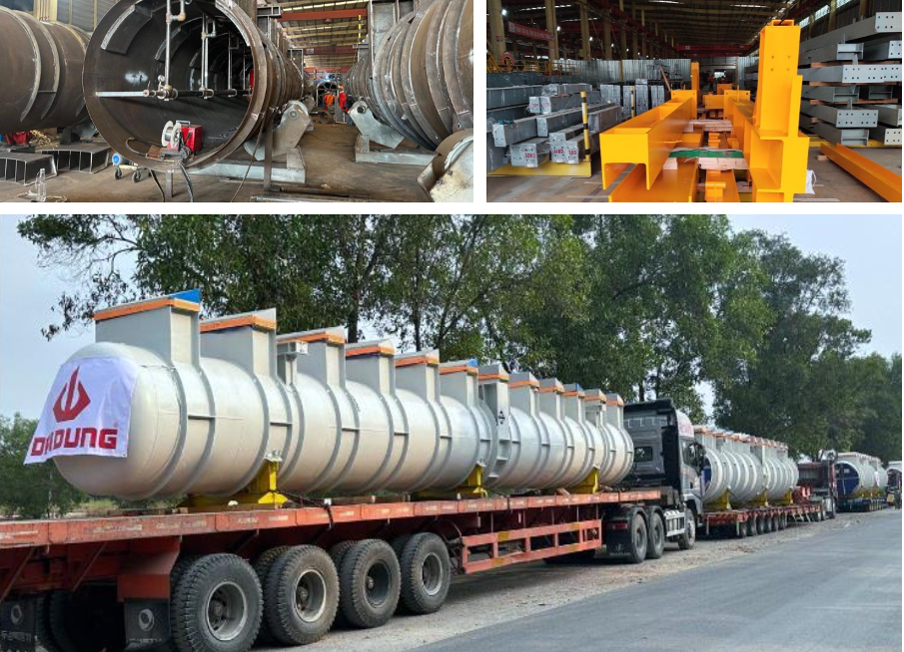
Design, Production, Inspection, and Maintenance Process for Oil Pipeline Steel Pipes at Dai Dung Group
Every oil pipeline steel pipe product from DaiDung Group undergoes a rigorous process:
- It begins with technical consultation and design according to project standards.
- This is followed by optimal material selection, fabrication, and surface treatments such as galvanizing.
- Quality inspection is conducted using advanced equipment.
- Finally, transportation, installation, and periodic maintenance ensure long-term, efficient operation.
The entire production process is certified by ISO 9001:2015, ISO 3834-2:2021, EN 1090-1 EXC 4, and AISC, providing the foundation for products that meet the technical and safety requirements of large-scale petrochemical projects.
DaiDung Group has not only become a guarantee of quality and production capacity for oil pipeline steel pipes in the domestic petrochemical industry but has also significantly expanded its international presence. Its integrated solutions, high standards, and end-to-end value chain (from design, production, and inspection to construction and maintenance) enable Dai Dung Group to meet the growing demands of the energy, petrochemical, and oil & gas industries, while elevating Vietnamese products and personnel in the global market.